How to Tow a Car Safely and Legally: Complete Rules and Guidelines
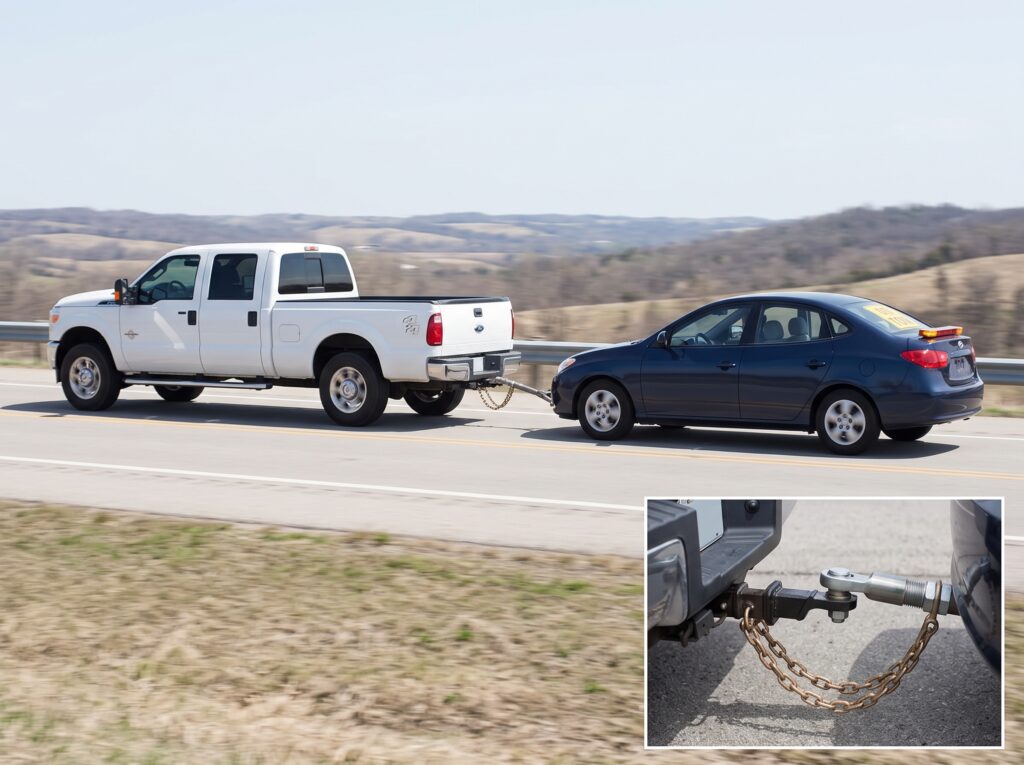
No one ever wants to face a situation where their vehicle breaks down and needs to be moved. However, mechanical failures, accidents, flat batteries, or running out of fuel are events that can happen to anyone, anywhere, and at any time. When this happens, the only solution is usually towing. But **towing a car is not as simple as just tying a rope and driving away**. It is a delicate maneuver that involves strict legal regulations, technical knowledge, and safety measures. Doing it incorrectly can lead to serious accidents, severe damage to both vehicles, traffic fines, and even legal liability if something goes wrong. In this complete and exclusive guide, we explain everything you need to know: what equipment you can use, speed limits, lighting rules, restrictions, and special care you must have, especially with modern cars.
📌 Legal Requirements: What the Law Says
Every country has traffic regulations that define exactly how towing must be done. These rules exist to protect you and everyone else on the road. Before connecting anything, you must know these standards by heart.
1. Approved Equipment: Tow Bars vs. Tow Ropes
You cannot use any rope, chain, or cable you find at home. The law specifies only two valid options, each with its own conditions:
- ✅ Rigid Tow Bar: This is the safest and most recommended system. It is a metal bar that keeps both vehicles at a fixed distance. **Maximum length: 5 meters.** It is mandatory when the towed vehicle has problems with brakes or steering, or if it is heavy. It prevents the cars from colliding or swaying.
- ✅ Flexible Tow Rope or Cable: Only allowed if **both steering and brakes are 100% functional** on the broken car. The length must be strictly **between 3 and 5 meters**. If it is too short, you risk crashing; if too long, it creates instability and danger for other drivers. It must be made of high-strength material and have visible markings.
❌ FORBIDDEN: Using wires, straps that stretch too much, or improvised elements. These break easily and cause accidents.
2. Maximum Recommended Speed
While some codes do not write an exact number, traffic experts and safety organizations establish a **maximum speed of 30 km/h (18 mph)** as the absolute limit. Even if the road is wide and empty, you must never go faster. Why?
- Lower speed gives you time to react and brake safely.
- It prevents dangerous swaying or fishtailing of the towed vehicle.
- It ensures that if something goes wrong, the consequences are minimal.
Remember: you are driving with double the weight and double the length. Slow is the only safe way.
3. Lighting, Signals, and Visibility
This is one of the most violated rules and the most important for safety. Other drivers must know exactly what you are doing.
- Same Signals: Every time you brake or turn on the towing car, the towed car must show the same lights. If its electrical system works, you use its lights. If not, you must install an external lighting board connected to the leading car.
- Night Restriction: If the lights of the broken car are faulty or disconnected, **towing is strictly PROHIBITED at night, at dusk, or in low visibility conditions** (fog, heavy rain, snow, dust storms). You can only move it during clear daylight.
- Identification Sign: You must place a clear sign on the back of the towed vehicle that says **“NOT OPERATIONAL”** or **“IN TOW”** to warn drivers behind you that the car cannot stop or react quickly.
- Hazard Lights: Do not keep the emergency lights flashing the whole trip. It confuses others when you actually need to turn or stop. Use them only when you are moving very slowly or stopping.
⚖️ Weight, Distance and Road Restrictions
Even if you have the right equipment, you cannot tow just any car or go wherever you want. There are physical and legal limits.
1. Weight Rule: Never Tow Heavier Than You
This is a physical law, not just a rule. **The weight of the towed vehicle must NEVER exceed the weight of the towing vehicle.** If you use a small car to pull a larger or heavier one, you lose braking power, steering becomes heavy and dangerous, and you risk destroying your own transmission or brakes. Only professional tow trucks are built to lift and transport heavier vehicles.
2. How Far Can You Go?
Legally, there is no exact kilometer limit, but the regulation says towing must be done **only to the nearest suitable place**. This means: to the closest repair shop, to the dealership, or to your home if it is nearby. Long-distance towing is extremely risky and is practically forbidden on public roads. For long distances, you must hire a professional transport service with a flatbed truck.
3. Highways and Expressways: A Big NO
Although not always written as a direct prohibition, towing on highways or high-speed roads is **strongly discouraged and almost illegal in practice**. The reason is simple: traffic moves at 90-120 km/h, but you can only go at 30 km/h. The difference in speed creates a lethal hazard. Other drivers come behind you much faster and may not brake in time. If you have no choice, you must stay strictly in the rightmost lane and use all warning signs possible, but it is always better to take secondary roads.
⚠️ Special Case: Automatic Transmission Cars
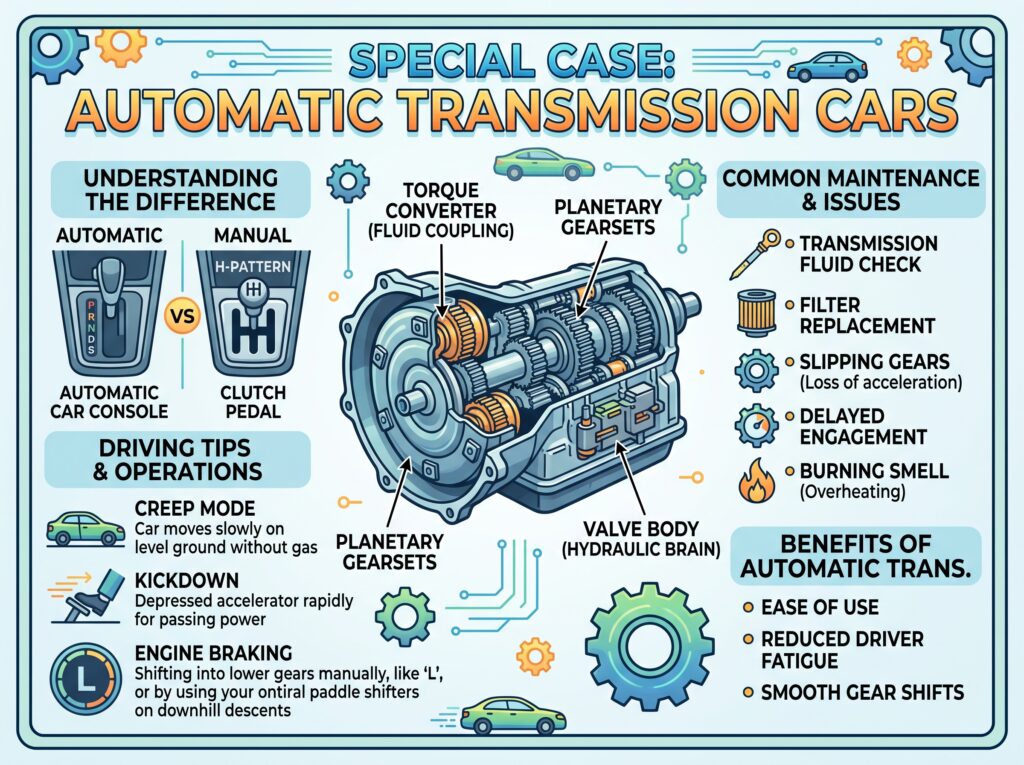
This is the most critical point and where most people make expensive mistakes. **Cars with automatic gearboxes are NOT like manual cars.** In a manual car, you can put it in neutral and tow it without major issues. In an automatic vehicle, the system is completely different: the lubrication pump works only when the engine is running. If you tow it with the wheels on the ground and the engine off, the transmission turns internally but has NO oil circulation. This creates extreme friction, heat, and destroys the gearbox in just a few kilometers.
✅ Rules for Automatic Cars:
- Best Method: Always use a **flatbed truck** that lifts the whole car off the ground. This is 100% safe.
- If you must tow with wheels down: Maximum speed **15-20 km/h**, maximum distance **10-15 km ONLY**, and gear lever in NEUTRAL (N). Never tow faster or further. Some manufacturers forbid it completely.
- 4×4 or AWD Vehicles: These cannot be towed with any wheels on the ground, even for a short distance. They must always be loaded onto a platform.
🛡️ Safety Checklist: Step-by-Step
To ensure everything goes well and you arrive safely, follow this strict protocol before moving:
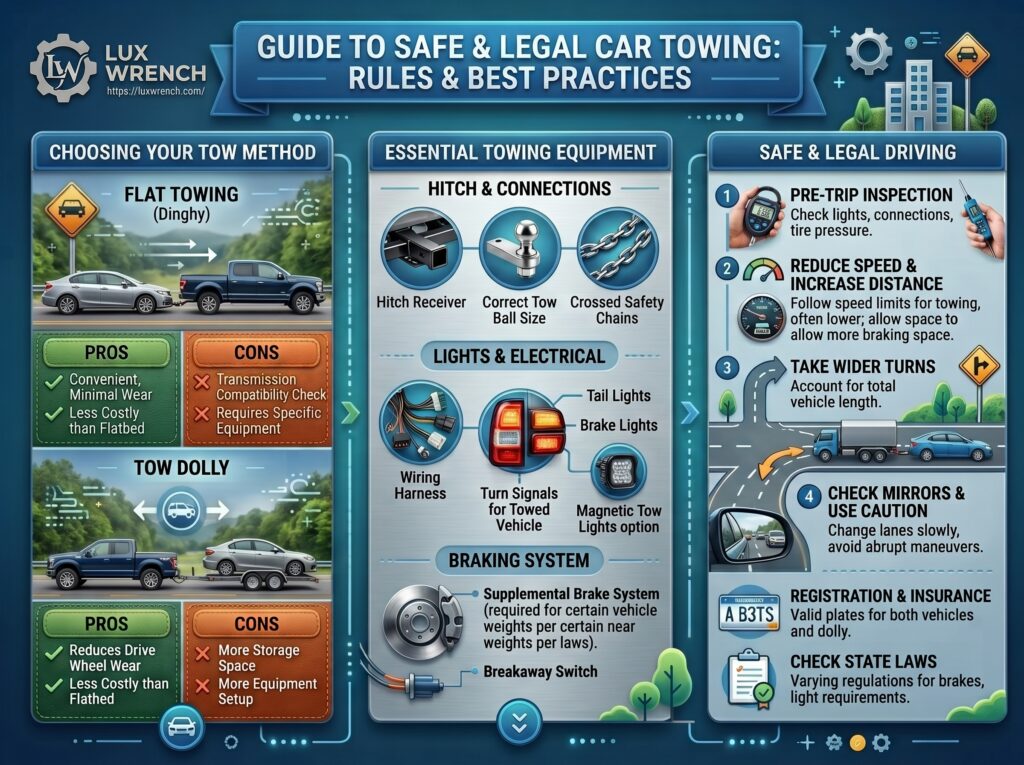
- Inspect the Connection: Check that the bar or rope is firmly attached to the official towing points (never the bumper or a pipe!). Ensure hooks are locked and secured.
- Agree on Signals: Both drivers must agree on simple hand signals or lights: *brake, turn left, turn right, stop, slow down*. Communication is vital.
- Positioning: The driver in the towed car must pay full attention, hold the steering wheel firmly, and follow the towing car’s path exactly. Do not let the rope go loose or too tight.
- Driving Style: Start very slowly, accelerate gently, brake early and smoothly. Do not make sudden turns or lane changes. Take wide curves to avoid hitting the curb or the other car.
- Monitor Constantly: Every few minutes, or after bumps, stop and check if the connection is still tight or if anything moved. If you feel instability or hear strange noises, stop immediately.
📹 Video Guide: Visual Explanation and Examples
Watch this video to see exactly how to connect, drive, and what mistakes to avoid:
📌 Conclusion: Safety and Legality First
Towing a vehicle is a serious operation that combines physics, mechanics, and law. It is not just about moving a car; it is about doing it without risk, without breaking the law, and without causing further damage.
Remember the key rules: use only approved bars or ropes (3 to 5 meters), do not exceed 30 km/h, ensure all lights work or do it only by day, never tow a heavier car than yours, and be extremely careful with automatic transmissions.
If you have any doubt about the condition of the car, the weight, or the safety of the maneuver, **do not risk it**. Call a professional towing service. The small cost is nothing compared to the expense of an accident or a broken gearbox. Being prepared and informed turns a stressful situation into a safe, legal, and successful operation.