
When your brake pedal feels mushy, spongy, or sinks toward the floor with unusual ease, you’re experiencing a critical warning sign that demands immediate attention. This compromised pedal feel indicates underlying problems within your braking system that can severely impact stopping power and vehicle safety. Understanding what causes this condition and how to address it protects you and everyone on the road.
Understanding the Spongy Brake Pedal Problem
A properly functioning brake pedal should feel firm and responsive, providing consistent resistance when pressed. When the pedal becomes soft or unstable, it signals that something within the hydraulic braking system has failed or degraded. This spongy sensation occurs when the hydraulic pressure that normally transmits your foot force to the brake components becomes compromised.

Several mechanical issues can trigger this dangerous condition, ranging from fluid leaks to contaminated brake lines. Regardless of the specific cause, a soft brake pedal represents a serious safety hazard requiring urgent diagnosis and repair. Never delay addressing this problem, as brake failure can occur suddenly and without additional warning.
Main Causes of Brake Pedal Softness

Brake Line Deterioration and Leaks
Brake lines transport pressurized fluid throughout your braking system, and their integrity is essential for proper operation. Over time, these metal tubes can succumb to corrosion from road salt, moisture exposure, and environmental conditions. Rust weakens the metal, eventually creating small perforations or cracks that allow brake fluid to escape.
When fluid leaks from damaged brake lines, the hydraulic pressure necessary for effective braking diminishes significantly. You’ll notice the fluid reservoir level dropping progressively, accompanied by increasingly soft pedal feel. Regular visual inspection of brake lines, particularly in areas prone to rust accumulation, helps identify deterioration before complete failure occurs. Replacing corroded or damaged brake lines restores system integrity and proper pedal resistance.
Insufficient Brake Fluid Level
Brake fluid serves as the hydraulic medium transmitting force from the pedal to the brake calipers and wheel cylinders. When fluid levels drop below optimal capacity, insufficient hydraulic pressure develops, resulting in a spongy pedal sensation. Low fluid levels typically indicate either a leak somewhere in the system or severely worn brake pads that have caused fluid displacement.
Check your brake fluid reservoir regularly—it should remain between the minimum and maximum indicators. If levels are low, add the manufacturer-specified brake fluid type to restore proper volume. However, simply topping off fluid addresses only the symptom. Investigate why fluid levels dropped to identify and repair any underlying leaks or worn components causing the deficiency.
Air Contamination in Brake Lines
Air infiltration into brake lines represents the most common cause of spongy brake pedals. Unlike incompressible brake fluid, air bubbles compress easily when pressure is applied, creating that characteristic mushy feeling. Air can enter the system through several pathways: deteriorated seals, loose connections, improperly performed brake work, or prolonged low fluid levels that expose line openings.
Corrosion and rust accelerate seal degradation, making air entry more likely in older vehicles or those exposed to harsh conditions. When air contaminates the hydraulic system, the only effective solution is bleeding the brakes—a process that purges trapped air bubbles while maintaining proper fluid levels. Professional brake bleeding ensures complete air removal and restores firm pedal feel.
Master Cylinder and Wheel Cylinder Failure
The master cylinder converts mechanical pedal force into hydraulic pressure, while wheel cylinders (in drum brake systems) apply that pressure to brake shoes. Internal seals within these cylinders can deteriorate from age, heat, and contamination, allowing fluid to bypass the pistons or leak externally.
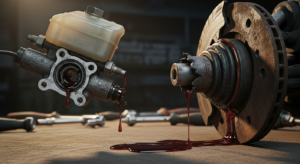
When master cylinder seals fail, pressing the brake pedal generates insufficient pressure because fluid moves past damaged seals rather than being forced through the brake lines. Similarly, leaking wheel cylinders lose fluid and pressure, contributing to pedal softness. Corrosion inside cylinders accelerates seal damage and creates rough surfaces that tear rubber components. Replacing failed cylinders is the only reliable repair method.
Worn Rear Brake Shoes
In vehicles equipped with rear drum brakes, excessive brake shoe wear can contribute to pedal softness. As shoes wear down, more pedal travel becomes necessary to bring them into contact with the drum surface. This increased travel can create a softer, less immediate pedal response.
Brake shoes require periodic inspection and replacement when wear indicators show they’ve reached minimum thickness. Regular handbrake use helps maintain proper shoe adjustment and reduces excessive wear. If you rarely use the parking brake, the self-adjusting mechanism may not function optimally, accelerating shoe wear and contributing to pedal problems.
Warning Signs and Symptoms
Beyond the obvious spongy feel, watch for these additional indicators of brake system problems:
- Brake pedal sinking slowly toward the floor when held under steady pressure
- Increased stopping distances despite normal pedal application
- Pedal feels different on successive applications
- Visible fluid spots under the vehicle where it parks
- Illuminated brake warning light on the dashboard
- Unusual sounds during braking, such as hissing or grinding
Any combination of these symptoms alongside pedal softness indicates serious brake system compromise requiring immediate professional evaluation.
Importance of Immediate Action
Delaying repair of a spongy brake pedal invites catastrophic consequences. Brake systems provide your primary means of controlling vehicle speed and avoiding collisions. When braking effectiveness becomes unpredictable, you cannot reliably stop in emergency situations, endangering yourself, passengers, and other road users.
What begins as slight pedal softness can rapidly progress to complete brake failure. Leaking fluid eventually depletes entirely, air contamination worsens, and corroded components deteriorate further. The cost and complexity of repairs increase substantially when problems advance from early stages to complete system failure.
Prevention Through Regular Maintenance
Preventive care keeps brake systems functioning reliably and helps avoid spongy pedal problems:
- Inspect brake fluid levels monthly and maintain proper fill
- Have brake systems professionally inspected annually
- Replace brake fluid according to manufacturer intervals
- Address rust and corrosion on brake lines and components promptly
- Replace brake pads and shoes before they wear completely
- Bleed brake systems after any repair work involving line disconnection
Conclusion
A spongy brake pedal is never acceptable and always indicates serious problems requiring immediate attention. Whether caused by leaking brake lines, low fluid levels, air contamination, failed cylinders, or worn brake shoes, the underlying issue compromises your vehicle’s stopping ability and creates significant safety risks.
Prompt diagnosis and professional repair restore proper brake function, ensuring firm pedal feel and reliable stopping power. Regular maintenance prevents most brake problems from developing, while attentiveness to warning signs enables early intervention before minor issues become dangerous failures.
Never ignore a soft brake pedal or postpone necessary repairs. Your safety and the safety of everyone sharing the road depends on fully functional brakes that respond predictably and effectively every single time you press the pedal.