Winter leaves behind more than just cold memories. It also leaves hidden wear on your vehicle—from harsh temperatures to road salt, moisture, and ice. As the season changes, it’s important to perform post-winter car maintenance to ensure your vehicle remains safe, efficient, and ready for warmer weather. Many drivers think switching from winter tires to summer tires is enough, but the truth is that your car needs a much deeper inspection after winter.
In this guide, we cover the most important areas to review so you can protect your vehicle, avoid costly repairs, and drive with confidence throughout spring and summer.

1. Update the Coolant (Antifreeze)
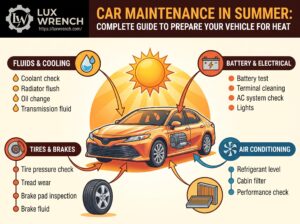
Coolant is essential all year, not only in winter. It protects the engine from freezing, overheating, and corrosion. Most coolants come in concentrated form and must be mixed with distilled water according to the manufacturer’s recommendations. Since coolant loses effectiveness after two to three years, replacing it is a key part of post-winter car maintenance. A fresh coolant mixture helps stabilize engine temperature during warmer months and prevents overheating.
2. Inspect the Air, Fuel, and Oil Filters
Filters protect your engine from harmful contaminants. After winter, they often carry dust, debris, and moisture buildup.
-
Air filter: Prevents dirt and insects from entering the engine. A clogged filter reduces performance and fuel efficiency.
-
Fuel filter: Blocks particles that could damage the fuel system.
-
Oil filter: Captures metal fragments and combustion residue to keep the oil clean.
Replacing filters is a simple but powerful step in improving vehicle performance after winter.
3. Check the Brake Fluid
Brake fluid absorbs moisture during winter, which reduces braking power. If it appears dark and no longer has a light brown color, it needs to be replaced. Many drivers overlook this step, but fresh brake fluid greatly increases safety, especially during rainy spring conditions. As part of post-winter car maintenance, make sure the braking system responds quickly and efficiently.
4. Inspect the Brake Pads
Brake pads do not have a fixed replacement mileage because wear depends on driving style and road conditions. Winter often accelerates wear due to moisture, salt, and cold temperatures. Signs that your brake pads need attention include:
-
Steering wheel vibration
-
Soft brake pedal
-
Car pulling to one side
-
Grinding noises
-
Overheated wheels
If you notice these symptoms, visit a mechanic immediately.
5. Replace the Power Steering Fluid
Cold temperatures can thicken or degrade power steering fluid. If turning the steering wheel feels harder than normal or you hear noises while steering, the fluid may need to be replaced. Follow your owner’s manual for specific intervals. If the problem continues, a professional inspection may be required.
6. Additional Areas to Inspect After Winter
Seasonal transitions create new driving challenges. Winter conditions may have weakened parts that you cannot easily see.
Suspension System
Potholes hidden by snow can damage shock absorbers and struts.
Battery
Multiple cold starts can reduce battery capacity. Testing it ensures reliability.
Lighting System
Moisture and ice can affect bulbs and lenses, reducing visibility.
Wipers, Belts, and Hoses
Winter frost can cause cracks, stiffness, or leaks.
Cooling System
A full inspection prevents overheating during hot summer months.
Conclusion
Performing proper post-winter car maintenance is essential for a safe, smooth, and reliable driving experience. By checking your fluids, brakes, filters, battery, lights, belts, hoses, and cooling system, you reduce the risk of breakdowns and extend the life of your vehicle. Preparing your car now ensures better performance, improved fuel efficiency, and peace of mind as you enter the spring and summer seasons.