Used Car Parts: What to Avoid and What’s Safe — Complete Guide

Buying used car parts from dismantling yards or second-hand markets often seems like a smart and cost-effective solution to repair or upgrade your vehicle. At first glance, the price difference is attractive, and many people believe that “a part is just a part.” However, while some components can be safely reused without risk, the reality is very different when it comes to elements that affect safety, performance, and engine integrity. Many used components are worn out, have an unknown history, are not original, or come completely without guarantee or warranty. This turns what seemed like a saving into a high-risk gamble. In this complete guide, we explain exactly which parts you should never buy second-hand, which ones are safe, and why investing in new or certified parts is always the best decision for your safety and your pocket.
⚠️ The Big Risk: Why Not All Parts Are The Same
When you buy a used part, you are acquiring an item that has already endured stress, heat, friction, and wear, but you have no way of knowing exactly how much life it has left or what conditions it worked under. Was it overheated? Did it suffer an impact? Was it maintained correctly? These are questions you cannot answer. While aesthetic elements like exterior trims, moldings, or decorative pieces are generally safe to buy used, there are critical systems where failure can lead to accidents, breakdowns, or catastrophic engine damage. For these components, the rule is clear: always choose new or professionally reconditioned parts with warranty.
❌ Parts You Should NEVER Buy Used: High-Risk List
1. Clutch Kits: Critical and Expensive to Replace
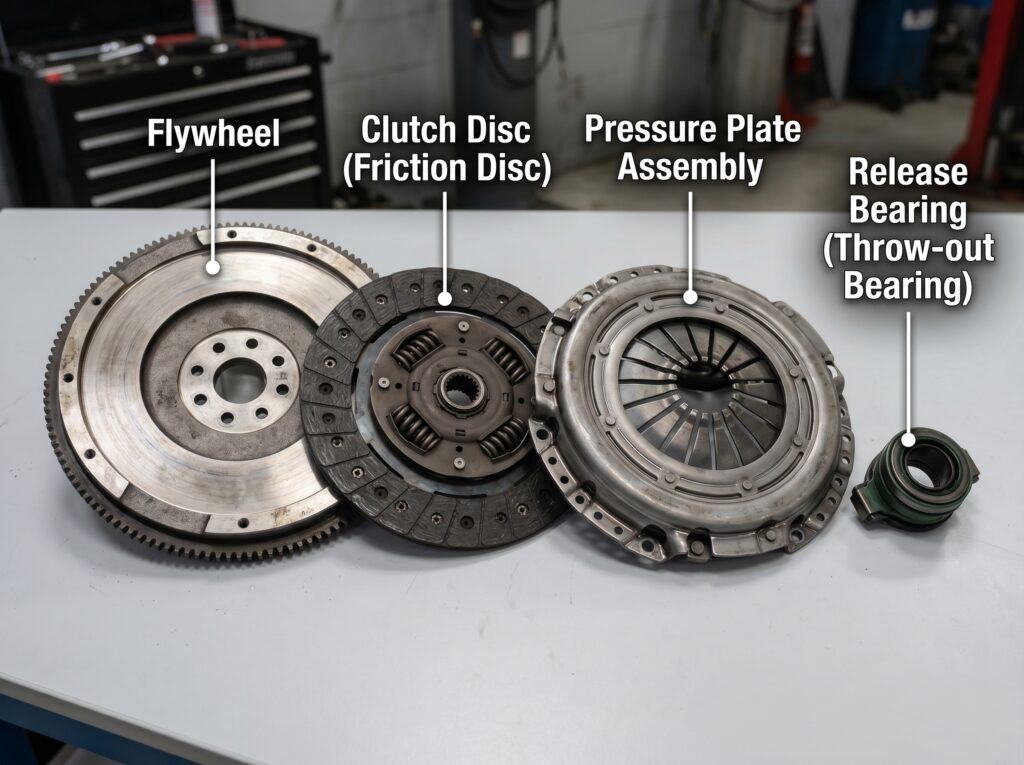
The clutch system is one of the most stressed components in any vehicle. A complete kit includes the disc, pressure plate, release bearing, and often the flywheel. Every time you change gear, these parts work under high pressure and friction. Buying a second-hand clutch is one of the worst investments you can make. Even if it looks fine, it has already endured thousands of cycles, and its lifespan is drastically reduced. It can fail after just a few weeks or months of use. Worse yet, replacing a clutch is labor-intensive and expensive, as it requires removing the entire transmission. Recommendation: Always install a brand-new kit or one that has been professionally reconditioned and certified, ensuring smooth operation and long-term reliability.
2. Shock Absorbers and Suspension Components
Your suspension system is directly responsible for stability, comfort, and braking efficiency. It keeps your tires firmly on the road. While coil springs might be acceptable second-hand if they show no rust or deformation, shock absorbers should always be new. Used shocks have an unknown history; they may be worn out, have lost hydraulic pressure, or suffered internal damage. Installing them results in poor handling, longer braking distances, and dangerous behavior on curves or wet surfaces. Rubber elements like bushings, silentblocks, and mounts are also risky: rubber degrades naturally with time, heat, and use. Even if they look good, they will harden, crack, or break shortly after installation, causing vibrations and noise. Recommendation: Always renew shock absorbers and rubber components. It is a safety issue.
3. High-Pressure Fuel Pumps (Diesel Engines)
Modern diesel engines work with extremely high pressure systems (Common Rail), where the pump generates pressures of over 2,000 bars. These components are precision-made and very sensitive. They fail frequently due to dirty fuel, water contamination, or lack of maintenance. Buying a used pump is a huge risk: you do not know if it comes from a car that used bad fuel, if it has internal wear, or if it is about to fail. If it breaks down in your car, it can send metal debris through the entire fuel system, destroying injectors and pipes, leading to a repair cost of thousands of dollars. Recommendation: Only install new or professionally rebuilt pumps with a guarantee. It is not worth the risk.
4. Turbochargers: High Cost, High Precision
The turbocharger is a masterpiece of engineering, spinning at speeds up to 150,000 RPM under extreme heat and pressure. It is also one of the most expensive parts in the engine. Buying a used turbo is almost always a mistake. You cannot test its performance or internal condition before fitting it. It may have damaged bearings, worn blades, or cracks that are invisible to the eye. Failure happens suddenly, and the damage is catastrophic: oil enters the engine, and debris can destroy the entire motor. Recommendation: If yours fails, better to rebuild your existing unit with specialized parts or buy a new one with full warranty. It guarantees perfect operation.
5. Water Pumps and Timing System Parts
The water pump works together with the timing belt. It is a moving part with seals and bearings that wears out. If you are changing the timing belt (which is a mandatory maintenance task), the water pump must always be new. Installing a used one is dangerous: if it seizes or leaks, the belt jumps or breaks, and you face catastrophic engine damage. Filters (oil, fuel, air) are another obvious example: they are cheap, but their job is to trap dirt. A used filter is already saturated or damaged; using it allows contaminants to pass through, damaging injectors, cylinders, or the oil pump. Recommendation: These are low-cost parts; never try to save money here.
6. CV Joints and Drive Shafts
Constant Velocity (CV) joints transfer power from the differential to the wheels while allowing movement for suspension and steering. They work under high torque and rotate constantly. Used joints often have play, wear, or damaged boots that allow grease to escape and dirt to enter. Even if they seem fine, they will soon start making clicking noises or vibrations. While reconditioned options exist, the price difference is small, and new parts offer total peace of mind. Recommendation: Always replace them with new units to ensure smooth transmission and safety.
✅ Parts That ARE Safe to Buy Used
Not everything is dangerous. There are many components where saving money is perfectly safe and logical:
- Bodywork and Exterior Parts: Doors, hoods, bumpers, mirrors, lights, grilles, or trim pieces. They have no moving parts, do not affect mechanics or safety, and work exactly the same regardless of age, as long as they are not broken.
- Interior Accessories: Seats, panels, handles, switches, or seats. As long as they are clean and intact, they function perfectly.
- Wheels and Rims: Safe if they are not bent, cracked, or repaired. They are durable and easy to inspect visually.
- Non-Electronic Sensors: Some mechanical sensors can be reused, but electronic ones are risky.
🔧 Professional Reconditioning: The Middle Ground
Between “used” and “new” there is a third excellent option: professionally reconditioned or remanufactured parts. This applies to alternators, starters, pumps, or injectors. In this process, the part is completely disassembled, cleaned, worn components are replaced with new ones, and it is tested to factory standards. These parts are cheaper than new ones but come with a warranty and guaranteed quality. It is a smart balance between price and reliability.
📹 Video Guide: What Parts to Buy New or Used
Watch this video to understand visually which components are safe to buy second-hand and which ones you must always replace:
📌 Conclusion: Safety First, Savings Second
While dismantling yards and second-hand markets offer tempting prices, the decision must always be based on safety and function. Components that are critical for braking, steering, engine timing, fuel delivery, or power transmission — such as clutch kits, shock absorbers, high-pressure pumps, rubber elements, water pumps, turbos, and CV joints — should always be purchased new or certified reconditioned.
Investing in quality parts is not an expense; it is protection for your vehicle and your life. A cheap part that fails can cause damage worth ten times more than what you saved. By choosing wisely, you ensure reliability, avoid unexpected breakdowns, and keep your car safe and performing optimally. When in doubt, consult a professional: it is always better to be safe than sorry.