The car exhaust system represents a critical assembly present in every vehicle, responsible for safely evacuating combustion gases produced during engine operation. This complex network of components directs harmful emissions away from the engine and passenger cabin while reducing noise, controlling pollution, and maintaining optimal performance. Understanding how your car exhaust system functions and recognizing signs of malfunction can prevent costly repairs and ensure safe vehicle operation.
Essential Components of the Car Exhaust System
Catalytic Converter
The catalytic converter serves as the environmental guardian within your car exhaust system, chemically transforming harmful pollutants into less dangerous substances before releasing them into the atmosphere. This component reduces carbon monoxide, hydrocarbons, and nitrogen oxides through chemical reactions occurring within its ceramic honeycomb structure coated with precious metals.

When catalytic converters fail, several warning signs become apparent. Engines may stall immediately after starting, power output decreases noticeably, and fuel consumption increases significantly. Additional symptoms include rough idling, engine trembling, unpleasant odors during cold starts, and unusual rattling sounds emanating from underneath the vehicle. These indicators demand immediate professional attention to prevent further damage.
Exhaust Manifold
The exhaust manifold collects gases and heat directly from engine cylinders, channeling them toward downstream components. Manufacturers typically construct manifolds from cast iron due to this material’s exceptional thermal insulation properties and ability to withstand extreme temperatures without warping or cracking.
Manifold failures often result from thermal stress causing cracks or warping. Damaged manifolds create distinctive ticking or hissing sounds, particularly noticeable during cold starts and acceleration. These defects allow exhaust gases to escape before proper processing, increasing emissions and creating potential carbon monoxide hazards.
Resonator
The resonator creates backpressure within the car exhaust system while reducing specific sound frequencies produced by engine operation. This component works in conjunction with the muffler to achieve quieter operation while maintaining proper exhaust flow that contributes to torque generation and engine efficiency.
Resonator damage manifests as increased exhaust volume and changes in exhaust note character. While not immediately catastrophic, failed resonators reduce driving comfort and may indicate broader system deterioration requiring inspection.
Muffler
Positioned as the final component in the car exhaust system, the muffler performs dual functions: releasing gases into the atmosphere at reduced temperatures while significantly attenuating noise produced by engine operation. Internal baffles and chambers force exhaust gases through specific pathways that cancel sound waves through destructive interference.

Muffler failure creates unmistakably loud exhaust notes, often accompanied by rattling sounds from loose internal components. Rust perforation, common in older vehicles, allows gases to escape prematurely, defeating the muffler’s sound-dampening purpose entirely.
Downpipe
The downpipe, characterized by its distinctive S-shaped configuration, connects the exhaust manifold or turbocharger outlet to either the catalytic converter or resonator. This component manages the initial direction change of high-velocity exhaust gases exiting the engine.
Downpipe issues typically involve cracks or separation at connection points, creating exhaust leaks that manifest as hissing sounds and reduced engine performance. Failed gaskets at downpipe joints represent common failure points requiring periodic inspection.
Recognizing Car Exhaust System Problems
Dashboard Warning Lights
When the car exhaust system develops malfunctions, the check engine light typically illuminates, alerting drivers to problems within emission control systems. However, this general warning provides no specific information about which component failed or the severity of the issue. Comprehensive diagnostic scanning becomes necessary to identify precise fault codes and affected components.
Unusual Noises
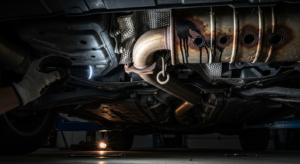
Metallic rattling, dragging sounds, or significantly louder exhaust notes indicate physical damage or component separation within the car exhaust system. These symptoms often result from broken hangers allowing pipes to contact the vehicle undercarriage, corroded connections failing, or internal muffler baffles breaking loose. Any sudden change in exhaust sound characteristics warrants immediate inspection.
Backfire and Popping
Backfire occurs when unburned fuel ignites within the exhaust system rather than the combustion chamber, creating loud popping sounds accompanied by visible flames from the tailpipe. This condition indicates serious problems with fuel mixture, ignition timing, or exhaust valve function. Backfire can damage catalytic converters and other components through excessive heat and pressure.
Performance Issues
A compromised car exhaust system restricts proper gas flow, creating backpressure that reduces engine efficiency. Symptoms include decreased acceleration, reduced power output, increased fuel consumption, and difficulty maintaining highway speeds. These performance degradations often develop gradually, making them easy to overlook until they become severe.
Visual Inspection Indicators
Regular visual inspection reveals many car exhaust system problems before they become serious. Look for rust perforation, hanging or dragging components, black soot deposits around connections indicating leaks, and physical damage from road debris or bottoming out. Any visible smoke—whether white, blue, or black—suggests problems requiring immediate diagnosis.
Preventive Maintenance for Longevity
Protecting your car exhaust system requires minimal effort but yields significant benefits. Avoid driving through deep water that can thermally shock hot components. Address check engine lights promptly before minor issues escalate. Schedule regular inspections, particularly before emission testing. Replace worn hangers and damaged heat shields to prevent component damage from excessive movement or heat transfer.
Conclusion
Understanding your car exhaust system, recognizing malfunction symptoms, and performing timely maintenance ensures optimal vehicle performance, environmental compliance, and passenger safety. This critical assembly deserves attention and care proportional to its importance in overall vehicle operation and emissions control.