Antifreeze, also known as engine coolant, ranks among your vehicle’s most vital fluids. This specialized liquid regulates engine temperature, prevents winter freeze damage, and shields internal components from destructive corrosion. Mastering proper mixing techniques, understanding dilution ratios, and following maintenance schedules protects your engine from overheating and costly thermal-related failures.
Why Engines Need Coolant Protection
Automotive engines produce extreme heat through constant fuel combustion. Without adequate cooling, internal temperatures would quickly reach destructive levels, causing warped cylinder heads, seized pistons, and complete engine failure. Coolant circulates through a closed-loop system, flowing between the engine block and radiator while absorbing excess thermal energy and releasing it through radiator fins.
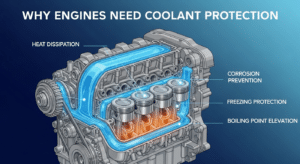
Beyond temperature control, modern coolant formulations deliver essential protective benefits. They prevent cooling system water from freezing solid in cold climates—ice expansion would crack engine blocks and radiator cores catastrophically. Simultaneously, coolant raises boiling points during extreme heat or heavy loads, maintaining system integrity under pressure. Chemical additives combat corrosion attacking aluminum, steel, and copper components while lubricating water pump seals to prevent premature wear.
The Critical 50/50 Mixing Ratio
Most antifreeze reaches consumers as concentrated formula requiring dilution before use. The universally recommended mixture is 50% concentrated coolant combined with 50% distilled water. This balanced ratio delivers optimal performance across multiple critical parameters.
A proper 50/50 mixture provides freeze protection down to approximately -34°F while raising boiling points to around 265°F under system pressure. This concentration maximizes corrosion inhibitor effectiveness and maintains ideal viscosity for efficient circulation through narrow cooling passages. Deviating from this ratio creates significant problems that compromise engine protection.
Excessive water dilution—using more than 50% water—dangerously reduces freeze protection and lowers boiling points. Over-diluted coolant allows engines to overheat under load or during hot weather while reducing corrosion protection effectiveness. Conversely, using too much concentrated coolant creates an overly thick mixture with poor heat transfer characteristics. This viscous fluid circulates sluggishly, reducing cooling efficiency and straining the water pump. Ironically, excessive coolant concentration actually decreases both freeze and boil-over protection compared to properly balanced mixtures.
Why Water Quality Matters Tremendously
The water component in your coolant mixture profoundly affects system longevity. Always use distilled or deionized water when mixing—never tap water, well water, or untreated sources. This requirement isn’t arbitrary; it prevents serious damage from mineral contamination.
Tap water contains dissolved minerals including calcium, magnesium, iron, and various salts. When heated, these minerals precipitate out, forming scale deposits throughout cooling passages, radiator tubes, and thermostat housings. Scale buildup acts as insulation, dramatically reducing heat transfer efficiency and causing localized overheating. Mineral deposits also accelerate corrosion by creating galvanic cells on metal surfaces while clogging narrow passages. The water pump suffers particularly as mineral accumulation damages seals and increases bearing friction.

Distilled water eliminates these problems by removing virtually all dissolved contaminants. This pure water allows coolant additives to function exactly as engineered without mineral interference. The modest cost of distilled water prevents thousands of dollars in potential cooling system damage.
Topping Off Between Service Intervals
Cooling systems occasionally need fluid additions between complete replacement intervals. When adding small amounts—under one quart—premixed 50/50 coolant provides convenient simplicity. However, repeated top-offs with premixed coolant when only water has evaporated gradually increases concentration beyond ideal levels.
If you frequently add coolant, investigate the underlying cause rather than continuously topping off. Persistent coolant loss indicates leaks requiring professional repair. Always add coolant to completely cold engines—never when hot. Opening hot systems releases pressurized steam causing severe burns, while introducing cold fluid into overheated engines risks thermal shock damage to metal components.
Understanding Coolant Colors and Types
Modern coolants appear in various colors—green, orange, pink, blue, and yellow—identifying different chemical formulations optimized for specific engine materials. Never assume color definitively indicates coolant type; always verify specifications on containers. Most critically, never mix different coolant types or colors.
Combining incompatible formulations triggers chemical reactions that neutralize protective additives, create gel-like precipitates, or form corrosive compounds. These reactions destroy coolant protection, potentially causing rapid system failure. When changing coolant types, completely flush the entire system first, removing all traces of previous formulations.
Replacement Schedules and Degradation
Coolant doesn’t last forever—chemical additives deplete through normal operation. Most manufacturers recommend complete replacement every 30,000-50,000 miles or every 2-3 years. Degraded coolant loses freeze protection, experiences reduced boiling points, and provides diminished corrosion inhibition. The pH level shifts, potentially turning acidic and accelerating metal corrosion.
Visual signs of deteriorated coolant include rusty appearance, floating particles, or oily surface films. Regular replacement represents inexpensive insurance against expensive engine damage. Fresh coolant with active additives protects your engine investment far more cost-effectively than repairing neglected maintenance damage.
Material Compatibility Essentials
Different engines utilize various materials in cooling systems. Older engines feature cast iron blocks and copper-brass radiators, while modern engines incorporate extensive aluminum components. Each material requires specific corrosion inhibitor formulations for optimal protection. Always consult your owner’s manual before selecting coolant. Using incompatible formulations accelerates rather than prevents corrosion, causing premature failures.
Conclusion
Proper antifreeze mixing and maintenance protects your engine’s most expensive components. Follow the 50/50 ratio precisely, always use distilled water, select compatible coolant types, and replace on schedule. Never mix different coolant colors, add coolant only when engines are cold, and investigate persistent coolant loss immediately. These straightforward practices ensure reliable cooling system performance and long-term engine protection.