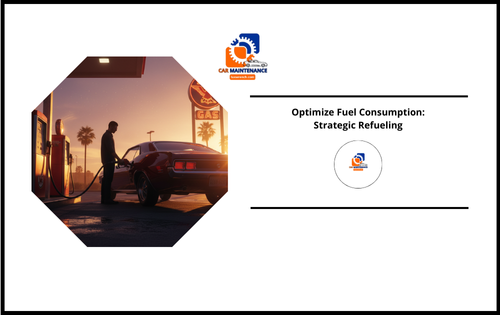
Strategic refueling practices significantly impact your vehicle’s fuel efficiency and operating costs. Understanding when and how to refuel can maximize every gallon while extending engine life and reducing unnecessary expenses. These proven fuel optimization strategies help drivers make informed decisions that benefit both their wallet and vehicle performance.
Strategic Route Planning for Fuel Efficiency
Advance preparation eliminates wasteful detours and reduces time spent searching for gas stations. Map your regular routes and identify conveniently located stations along your typical travel paths. Digital apps provide real-time fuel price comparisons, allowing you to select cost-effective options without deviating significantly from your route. This planning approach minimizes extra mileage, directly reducing overall fuel consumption while saving valuable time during busy schedules.
Optimal Refueling Times for Maximum Value

Temperature significantly affects fuel density, creating opportunities for smart savings. Early morning and late evening hours offer cooler temperatures when gasoline remains denser, meaning you receive more fuel volume for the same price. This physical property of liquids expanding in heat and contracting in cold makes timing your refueling sessions a simple yet effective optimization strategy that accumulates substantial savings over time.
Understanding Tank Level Management
Refueling when your tank reaches the quarter-full mark provides multiple efficiency benefits. Carrying excessive fuel weight constantly reduces overall fuel economy as your engine works harder to move the additional mass. However, running tanks too low risks sediment circulation from the tank bottom, potentially clogging fuel filters and damaging injection systems. Maintaining fuel levels between quarter and three-quarter capacity strikes the ideal balance between weight management and system protection.
The Science Behind Partial Refueling
Completely filling your tank creates unnecessary weight that your vehicle must transport continuously. Each gallon of gasoline weighs approximately six pounds, meaning a full tank adds significant mass compared to partial fills. Strategic partial refueling—adding enough fuel for your immediate needs plus a safety margin—keeps vehicle weight optimized for better fuel economy. This approach proves particularly beneficial for city driving where constant acceleration and braking magnify weight-related efficiency losses.
Avoiding Mid-Trip Refueling Inefficiencies
Planning refueling stops at trip beginnings or endings rather than midway reduces overall fuel consumption. Starting with adequate fuel eliminates unnecessary stops that interrupt momentum and require additional acceleration afterward. Each stop-and-start cycle consumes extra fuel, making continuous travel more efficient. Schedule refueling during natural breaks rather than creating additional stops specifically for fuel, maintaining optimal travel rhythm and efficiency.
Manufacturer Guidelines and Vehicle-Specific Recommendations
Your vehicle’s owner manual contains manufacturer-specific guidance regarding fuel type, octane requirements, and tank capacity considerations. Following these recommendations ensures optimal engine performance and prevents costly damage from incorrect fuel selection. Some vehicles require premium fuel for proper engine timing and performance, while others operate efficiently on regular grades. Respecting these specifications protects your investment and maintains warranty coverage while optimizing combustion efficiency.
Fuel Quality Considerations
Station selection impacts fuel quality and engine health. Reputable stations with high turnover maintain fresher fuel with fewer contaminants. Avoid stations immediately after tanker deliveries, as refilling stirs tank sediment that can enter your vehicle’s fuel system. Top-tier fuels containing enhanced detergent packages keep fuel injectors and intake valves cleaner, maintaining optimal spray patterns and combustion efficiency that directly translate to better fuel economy.

Complementary Efficiency Practices
Fuel optimization extends beyond refueling timing. Maintaining proper tire pressure reduces rolling resistance, improving efficiency by up to three percent. Regular maintenance including air filter replacement, spark plug service, and engine tune-ups ensures combustion efficiency. Removing unnecessary cargo weight and avoiding excessive idling further enhance fuel economy, creating cumulative savings when combined with strategic refueling practices.
Conclusion
Optimizing fuel consumption through strategic refueling timing represents a simple yet powerful approach to reducing transportation costs. By combining intelligent planning, temperature-aware refueling, appropriate fill levels, and manufacturer-recommended practices, drivers achieve measurable efficiency improvements. These habits not only decrease fuel expenses but also reduce environmental impact through lower emissions. Implementing these fuel optimization strategies creates lasting benefits, transforming routine refueling from a simple necessity into an opportunity for continuous savings and improved vehicle performance throughout ownership.