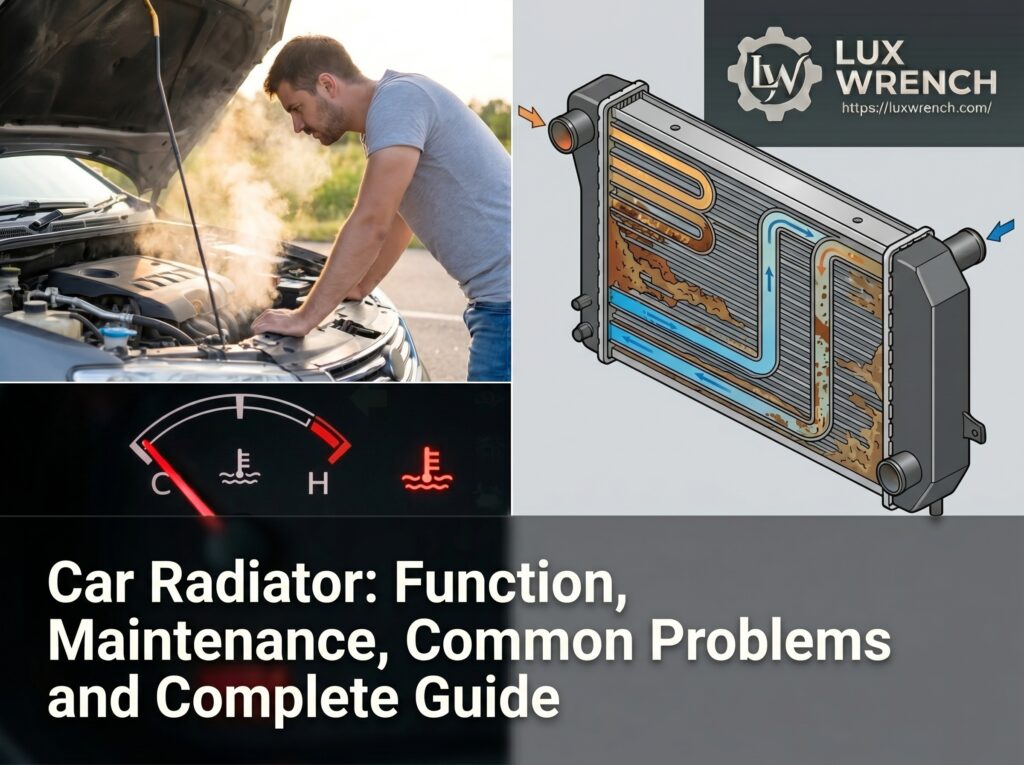
Car Radiator: Function, Maintenance, Common Problems and Complete Guide


Together with the engine, alternator, and brakes, the radiator is one of the most essential and critical components of any modern vehicle. It is the heart of the entire cooling system, designed specifically to regulate temperature and ensure that the engine works within its perfect operating range. Without a properly functioning radiator, or if you neglect its maintenance, the engine will overheat in minutes, leading to catastrophic failures and repairs that can cost thousands of dollars.
In this complete and professional guide, we explain everything you need to know: how it works step by step, why it is so important, how to clean it correctly, what failures you may face, and the maintenance schedule you must follow to protect your investment and keep your car running perfectly for hundreds of thousands of kilometers.
🔧 How the Radiator Works: Step by Step
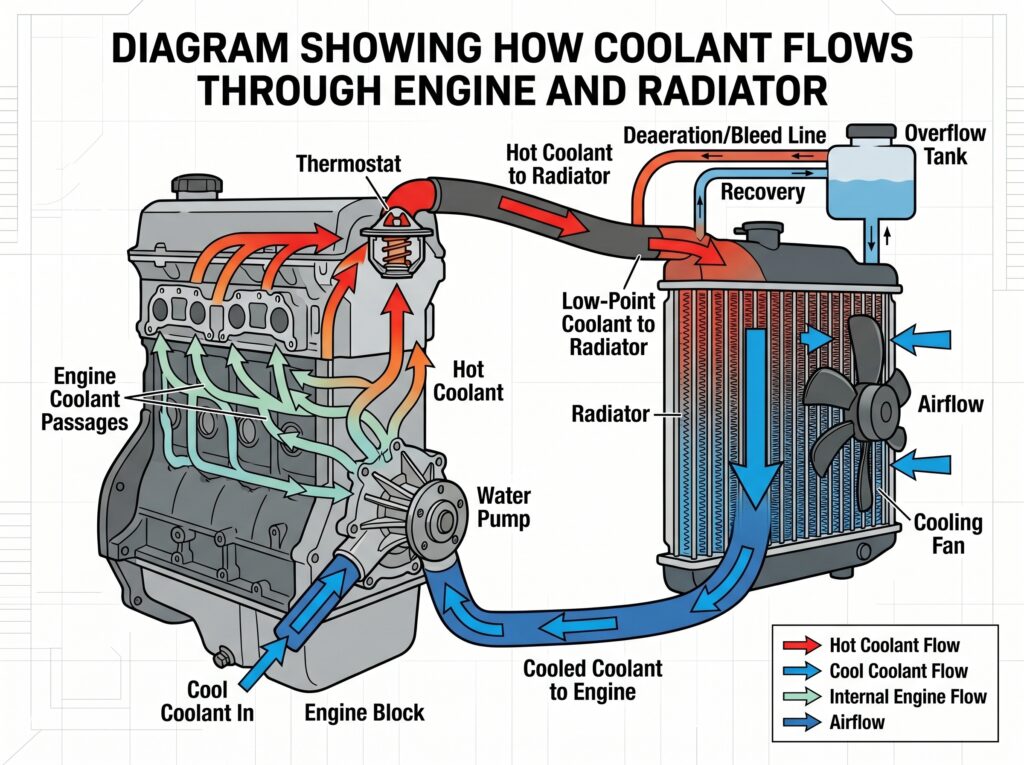
The radiator works as a heat exchanger, acting exactly like the lungs or the cooling system of a computer. It works in perfect coordination with other key parts: the water pump, the thermostat, the hoses, the cooling fan, and the coolant liquid itself. Here is the cycle:
- 🔥 Heat Absorption: When the engine runs, internal combustion generates immense heat (over 900°C). The coolant liquid circulates through the engine block and cylinder head, absorbing all that excess heat to prevent metal parts from melting or warping.
- ➡️ Transport: The water pump pushes this hot liquid, now at very high temperature, through the hoses and into the upper part of the radiator.
- ❄️ Cooling Process: Inside the radiator, the liquid flows through a network of thin tubes and fins designed to maximize surface area. As the car moves, air passes through these fins, taking the heat away. When the car is stopped or moving slowly, the electric fan activates to force air through and keep cooling.
- 🔄 Recirculation: Once cooled down, the liquid exits through the lower part of the radiator and returns to the engine to absorb heat again. This continuous cycle repeats thousands of times per hour to maintain stability.
This system ensures the engine stays between 90°C and 105°C, the optimal temperature where it is most efficient, produces less pollution, and suffers the least mechanical wear.
🧼 Why Radiator Cleaning Is Vital
One of the most common mistakes is thinking that because the radiator is made of metal, it does not need cleaning. Nothing is further from the truth. The front of the radiator is permanently exposed to the outside environment: dust, insects, leaves, mud, pollen, and road debris accumulate between the cooling fins. Over time, this creates a physical barrier that blocks airflow.
When air cannot pass freely, the cooling efficiency drops drastically. The engine works at higher temperatures, wears out faster, consumes more fuel, and is at permanent risk of overheating. Specialists recommend a deep external cleaning every 20,000 – 30,000 km or every time you change the coolant.
⚠️ Important: Never use high-pressure water directly against the fins; they are very thin and bend easily. If they get crushed, airflow is blocked forever. Use low pressure and specific radiator cleaning solutions to dissolve grease and dirt without damage.
⚠️ Main Problems and Failures of the Radiator
Because it works under high pressure, high temperature, and is exposed to impacts and corrosion, the radiator suffers with age. These are the 4 most common problems you must know how to detect:
1. Internal Clogging and Deposits
Inside the system, over the years, the coolant degrades, loses its chemical properties, and forms sediments, sludge, and mineral deposits. These accumulate at the bottom and walls of the radiator, reducing the internal passage space. If you never change the liquid, these deposits harden like stone and block the flow completely.
Recommendation: Change the coolant every 2 to 5 years or according to the manufacturer’s manual, regardless of mileage. This is the cheapest and most effective way to avoid blockages.
2. Overheating: The Worst Symptom
When the radiator cannot cool enough, the temperature gauge rises rapidly. This is the most dangerous situation. Overheating causes the metal to expand excessively, warping the cylinder head, blowing the head gasket, or cracking the engine block. These repairs cost thousands and often mean the end of the engine’s life.
Common causes: blocked fins, lack of liquid, internal clogging, or a broken fan.
3. Rust and Internal Corrosion
Modern radiators are made of aluminum and plastic, but older ones are metal. However, even modern ones corrode if the coolant is old or diluted with tap water (which you should never do). The liquid contains additives that prevent oxidation; when these expire, rust appears inside.
Warning Sign: If you open the tank and see the liquid is brown, muddy, or has oil traces, you have corrosion or a serious problem. You must flush the system immediately.
4. Leaks and Loss of Liquid
Leaks are the most visible failure. They happen due to impacts, vibrations, corrosion, or aging of the plastic tanks and rubber hoses. You may see puddles under the car, white steam coming out of the hood, or the level dropping constantly.
⚠️ Never drive with a leak: If the level drops, the pump runs dry, overheats, and destroys itself. If you have had a small collision, even if nothing looks broken, inspect the radiator first, as it is very fragile.
✅ Maintenance Plan: How to Take Care of It
To avoid all these problems and ensure your radiator lasts the entire life of the car, follow this simple maintenance plan:
- 🔍 Weekly Check: Look at the expansion tank. The level should always be between MIN and MAX marks. Never open it when hot!
- 🔧 Visual Inspection: Every 6 months, look underneath and around the radiator for wet spots, stains, or leaks.
- 🌬️ External Cleaning: Every year or 20k km, carefully clean the front fins to remove insects and dirt.
- 🔄 Total Change: Every 2 to 4 years, perform a complete flush and change of all coolant liquid. Use only high-quality liquid recommended for your car.
- 🚫 Never use tap water: It contains minerals that create scale and corrosion. Always use distilled water or ready-mixed coolant.
🛡️ Why This Component Defines Your Engine’s Life
Many drivers worry about oil, tires, or brakes, but forget the radiator. However, the cooling system is the guardian of the engine. It keeps the metal within safe limits, prevents thermal shock, and ensures that all parts expand and contract correctly.
A well-maintained radiator not only prevents breakdowns, but also improves performance: the engine runs smoother, consumes less fuel, produces less pollution, and has a much longer lifespan. It also protects other expensive parts like the water pump, hoses, and thermostat, which suffer if the temperature is wrong.
📹 Complete Video Explanation
Watch this video to see exactly how the system works, how to check it yourself, and how to perform a cleaning step by step:
📌 Conclusion
The radiator is much more than just a metal box at the front of your car. It is the most important part of the cooling system and the key to your engine’s health. Regular maintenance, cleaning, and timely replacement of the coolant are small efforts that save you thousands in repairs and keep your vehicle reliable and safe.
Neglecting it is playing with fire, literally. Take care of your radiator, and it will take care of your engine, ensuring your car serves you well for many years and kilometers without surprises.