The turbocharger represents one of automotive engineering’s most transformative innovations, converting wasted exhaust energy into substantial performance gains while reducing environmental impact. Understanding turbocharger function, benefits, and potential issues empowers vehicle owners to maximize this technology’s advantages through proper maintenance and informed operation practices.
Essential Turbocharger Function and Operation
Turbochargers harness exhaust gas energy that would otherwise escape unused through the exhaust system. This mechanism transforms thermal energy from combustion byproducts into kinetic force that compresses incoming air, dramatically increasing oxygen density entering the engine’s combustion chambers. Electronic control systems and wastegate valves regulate boost pressure according to driving demands, ensuring optimal performance across varying conditions.
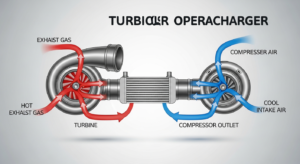
The turbocharger assembly connects directly to the engine’s exhaust manifold, capturing hot gases immediately after combustion completion. These gases flow through the turbine housing, spinning the turbine wheel at extraordinary speeds often exceeding 150,000 revolutions per minute. A precision-balanced shaft connects this turbine wheel to a compressor wheel housed in a separate chamber. As exhaust gases rotate the turbine side, the mechanically linked compressor wheel simultaneously spins, drawing ambient air through the intake system.
Compressed air exits the turbocharger at elevated temperature and pressure, typically passing through an intercooler that reduces temperature while maintaining density. Cooler, denser air enables more efficient combustion, extracting greater power from each fuel droplet while reducing harmful emissions.
Significant Turbocharger Benefits
Modern turbochargers deliver multiple compelling advantages that revolutionize engine performance and efficiency. Enhanced power output represents the most immediately noticeable benefit, allowing smaller displacement engines to produce power equivalent to much larger naturally aspirated alternatives. This downsizing trend enables manufacturers to reduce vehicle weight and friction losses while maintaining desired performance characteristics.
Improved acceleration responsiveness stems from increased air density providing richer fuel-air mixtures throughout the power band. Turbocharged engines deliver stronger torque curves, particularly in mid-range rpm where daily driving occurs most frequently. This enhanced torque accessibility creates more engaging driving experiences without requiring constant gear changes or high engine speeds.
Fuel economy improvements arise from operating smaller, lighter engines that require less energy to overcome internal friction. During light-load cruising, turbocharged engines consume less fuel than larger alternatives producing equivalent power. Combined with modern direct injection and variable valve timing technologies, turbochargers enable impressive efficiency gains that directly reduce operating costs.
Environmental benefits prove equally significant as performance advantages. Stricter emission regulations worldwide demand cleaner combustion and reduced pollutant output. Turbochargers facilitate complete fuel burning through improved air-fuel mixing and higher combustion pressures, substantially decreasing carbon monoxide, unburned hydrocarbons, and particulate emissions.
Common Turbocharger Defects and Causes
Despite robust engineering, turbochargers face operational stresses that can cause premature failure when maintenance lapses occur. Understanding common defect causes enables preventive measures that extend turbocharger lifespan significantly. Oil-related issues represent the most frequent failure category, as turbochargers depend entirely on pressurized lubrication for bearing survival under extreme rotational speeds and temperatures.

Contaminated or degraded engine oil introduces abrasive particles that damage precision bearings supporting the turbocharger shaft. Metal particles, carbon deposits, or dirt circulating through compromised oil destroy bearing surfaces rapidly, causing excessive shaft play, oil leakage, and eventual catastrophic failure.
Insufficient oil supply proves equally destructive, occurring when oil filters become clogged, oil pumps fail, or supply lines develop blockages. Turbochargers operating without adequate lubrication experience bearing seizure within seconds, generating intense friction heat that warps housings. Oil pressure loss warnings demand immediate engine shutdown to prevent permanent turbocharger destruction.
Foreign object damage from intake contamination causes immediate turbine or compressor wheel destruction. Loose hose clamps, deteriorated air filter elements, or debris entering through damaged ducting strike spinning wheels at tremendous velocity, bending or breaking blades. Even small objects create imbalance that causes violent vibration, accelerating bearing wear.
Excessive heat from prolonged high-load operation without adequate cooling periods degrades oil remaining in turbocharger bearings after engine shutdown. This “heat soak” carbonizes oil deposits onto bearing surfaces, restricting lubrication flow during subsequent startups.
Turbocharger Defect Prevention Strategies
Preventing turbocharger failures requires disciplined maintenance adherence and operational awareness. Regular oil changes using manufacturer-specified grades and intervals represent the single most effective preventive measure. Modern turbocharged engines demand synthetic oils meeting specific performance standards that provide superior heat resistance compared to conventional lubricants.

Quality oil filter selection proves equally critical, as inferior filters lacking adequate filtration efficiency allow contaminants to circulate freely. Premium filters trap microscopic particles before they reach turbocharger bearings, justifying their modest cost premium through extended component life.
Proper engine warm-up and cool-down procedures protect turbochargers from thermal stress extremes. Allowing oil pressure and temperature to stabilize before aggressive acceleration ensures adequate bearing lubrication. Similarly, idling briefly after highway driving allows turbocharger temperatures to decrease gradually while maintaining oil circulation, preventing heat soak damage.
Intercooler maintenance often receives inadequate attention despite its importance for turbocharger efficiency and longevity. Periodic intercooler cleaning restores optimal heat exchange, lowering intake temperatures and reducing turbocharger workload. Air filter inspection and replacement according to service schedules prevents debris ingestion that damages compressor wheels.
Conclusion
Turbochargers represent sophisticated engineering solutions addressing modern automotive demands for performance, efficiency, and environmental responsibility. Their ability to extract additional power from smaller engines while reducing fuel consumption and emissions makes them indispensable in contemporary vehicle design. Understanding turbocharger operation, recognizing their substantial benefits, and implementing proper maintenance practices ensures these components deliver reliable service throughout vehicle ownership.