Winter driving presents significant challenges that extend beyond icy roads and reduced visibility. Cold temperatures create hostile conditions for vehicles, particularly affecting critical components like the battery. During winter months, darkness arrives earlier, weather conditions deteriorate rapidly, and mechanical issues multiply. Starting problems become common, brakes respond differently, locks freeze solid, wipers stick to windshields, and handbrakes refuse to release due to extreme cold.
Despite these difficulties, proper preparation and maintenance can prevent most winter-related vehicle problems. Understanding how to protect your car battery during this demanding season ensures reliable performance when you need it most.
Understanding Car Battery Function
The battery serves as the electrical heart of your vehicle, powering essential systems that keep you safe and comfortable. It supplies energy to headlights, taillights, horn, power steering, heating systems, and electronic controls. Without adequate battery power, none of these critical functions operate properly.

Battery performance depends heavily on proper care and maintenance by the vehicle owner. Neglecting this vital component leads to shortened lifespan, unreliable starting, and potential safety hazards during dangerous winter conditions.
Why Winter Affects Battery Performance
Cold temperatures dramatically reduce battery efficiency and capacity. Chemical reactions inside batteries slow down significantly as temperatures drop, reducing available power output. A battery that performs perfectly during summer may struggle to provide sufficient cranking power when winter arrives.
Additionally, winter demands more from batteries. Engines require extra energy to start in cold weather, while heaters, defrosters, and lighting systems draw continuous power. This combination of reduced capacity and increased demand creates the perfect conditions for battery failure.
Essential Winter Battery Maintenance Steps
Cleaning and Inspection
Regular cleaning prevents performance issues and extends battery life. Begin by examining the battery casing for physical damage, cracks, or bulging that indicates internal problems. Check for fluid leaks around terminals or case seams, as these signal serious deterioration.
Clean the battery top and terminals thoroughly using a specialized cloth or brush. Remove all dirt, grime, and corrosion that accumulates over time. This debris creates pathways for electrical discharge, slowly draining your battery even when the vehicle sits unused.
Pay special attention to terminal connections. Corrosion appears as white, green, or blue crusty deposits around metal contacts. This oxidation increases electrical resistance, preventing proper current flow. Remove corrosion carefully using appropriate cleaning solutions or baking soda mixed with water.
Terminal Connection Verification
Loose terminal connections cause numerous problems, from difficult starting to complete electrical system failure. After cleaning, ensure both positive and negative terminals connect tightly to their respective cables. They should resist moderate hand pressure without movement.
Tighten connections using appropriate tools, but avoid excessive force that might damage terminals or crack the battery case. Properly secured terminals maintain consistent electrical contact regardless of vibration or temperature changes.
Voltage Testing
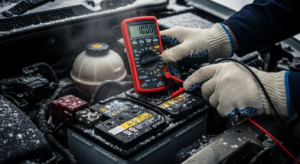
Regular voltage testing reveals battery health before problems occur. Using a multimeter, measure battery voltage with the engine off. A fully charged battery should display approximately twelve point six volts. Readings below twelve point four volts indicate partial discharge, while anything under twelve volts suggests serious depletion requiring immediate attention.
Test again with the engine running to verify charging system function. Voltage should rise to between thirteen point seven and fourteen point seven volts, confirming the alternator properly replenishes battery charge during operation.
Driving Habits That Protect Your Battery
Avoiding Short Trips
Frequent short journeys prove particularly harmful during winter. When you drive only brief distances, the alternator cannot fully recharge the battery after starting. Each cold start drains significant power, but short trips provide insufficient running time for complete recharge.
This repeated discharge and incomplete charging cycle gradually depletes the battery, eventually leaving insufficient power for reliable starting. If your typical winter driving involves trips under five kilometers, consider adjusting your routine.
Allowing Warm-Up Time
Before departing on short winter trips, allow the engine to idle briefly after starting. This practice gives the charging system opportunity to begin replenishing power used during startup. Even three to five minutes of running time helps maintain battery charge levels.
This warm-up period also benefits other vehicle systems, allowing engine oil to circulate properly and reaching operating temperature for improved fuel efficiency and reduced emissions.
Reducing Electrical Load
Minimize unnecessary electrical consumption, especially during startup and short trips. Turn off heating, radio, and other accessories before shutting down the vehicle. This ensures the battery dedicates maximum power to starting the engine during your next cold start.
After starting, wait a few moments before activating high-draw systems like heated seats or rear window defrosters. This allows the alternator to stabilize and begin charging effectively.
Additional Battery Protection Measures
Cable and Connection Inspection
Regularly examine all battery cables for damage, fraying, or corrosion. Compromised cables create safety hazards and prevent proper electrical system function. Replace damaged cables immediately to maintain reliable performance and prevent potential fires or electrical shorts.
Check cable routing to ensure they avoid hot engine components or sharp edges that might cause damage over time. Proper cable management extends their lifespan and maintains electrical system integrity.
Remembering to Turn Off Lights
One of the most common causes of dead batteries involves accidentally leaving lights on after exiting the vehicle. Always verify headlights, interior lights, and accessory lights are off before locking your car. Many modern vehicles include automatic shutoff features, but older models require manual verification.
Consider installing reminder systems or using electronic accessories that alert you when lights remain on after removing the key. This simple precaution prevents frustrating dead battery situations.
Recognizing Battery Warning Signs
Understanding early warning signs allows intervention before complete failure occurs. Slow engine cranking during starting attempts indicates reduced battery capacity. Dimming headlights when starting or operating multiple accessories suggest insufficient power availability.
Dashboard warning lights specifically indicating battery or charging system problems require immediate professional attention. These signals often precede complete failure by days or weeks, providing opportunity for preventive replacement.
Conclusion
Winter driving demands careful preparation and proactive vehicle maintenance to ensure safety and reliability. The car battery faces particular stress during cold months, with reduced efficiency coinciding with increased electrical demands. By implementing proper cleaning, inspection, and maintenance routines, drivers can significantly extend battery life and prevent inconvenient failures.
Adopting protective driving habits, such as avoiding excessive short trips and reducing unnecessary electrical loads, further preserves battery health throughout winter. Regular voltage testing and cable inspection catch developing problems before they leave you stranded in harsh conditions.