Stiff Steering Wheel: Causes, Warning Signs, and Complete Solutions

The steering wheel is the most vital control in any vehicle, serving as the direct link between you and the road. Under normal conditions, it should turn smoothly, effortlessly, and precisely, allowing you to maneuver safely at any speed, whether parking in the city or driving on the highway. However, when the steering wheel becomes stiff, heavy, or difficult to turn, it is far more than just an annoying inconvenience — it is a serious safety risk. Heavy steering reduces your ability to react quickly, increases physical effort, and compromises vehicle stability, putting you, your passengers, and other road users in danger. Understanding exactly why this happens, recognizing the warning signs early, and knowing how to fix it is essential for every driver. In this complete guide, we explain the main causes, what symptoms to watch for, and how to maintain your system to avoid this problem entirely.
🔍 Common Causes of a Stiff or Hard-to-Turn Steering Wheel
There are several reasons why your steering may become heavy or resistant. While some are simple and cheap to fix, others indicate serious mechanical failures that require immediate attention. Below we break down the 5 most common causes, from the easiest to solve to the most critical.
1. Incorrect Tire Pressure: The Simplest Problem
This is the most frequent and easiest cause to solve. Tire pressure directly affects how the car behaves and how much force you need to apply to turn the wheel. Underinflated tires are too soft; the sidewalls flex too much, creating excessive resistance against the road, especially at low speeds or when parking. Conversely, overinflated tires are too hard and do not grip the surface correctly, also making steering feel heavy and unstable. Both situations increase wear, reduce fuel efficiency, and compromise safety.
Solution: Check your tire pressure regularly, including the spare tire. Always follow the manufacturer’s recommended values found on the driver’s door frame or in the manual, not the maximum number written on the tire itself. Adjusting pressure takes 5 minutes and completely restores light steering.
2. Worn or Damaged Mechanical Components
Behind the wheel, there is a complex system of rods, joints, bushings, bearings, and linkages that transfer movement to the wheels. These parts are subject to constant movement, vibration, and exposure to dust, water, and heat. Over time, rubber bushings harden, crack, or disintegrate; ball joints wear out or lose lubrication; and connections rust or seize up. When this happens, friction increases, and the system loses its smoothness. You will notice that the steering gets heavier as the car warms up or when turning sharply.
Solution: These parts need periodic inspection. If you hear creaking, notice play in the wheel, or feel resistance, have a mechanic check the steering rack ends, tie rods, and suspension joints. Replacing worn components is affordable and prevents damage to the entire system.
3. Low Level or Leaks in Power Steering Fluid
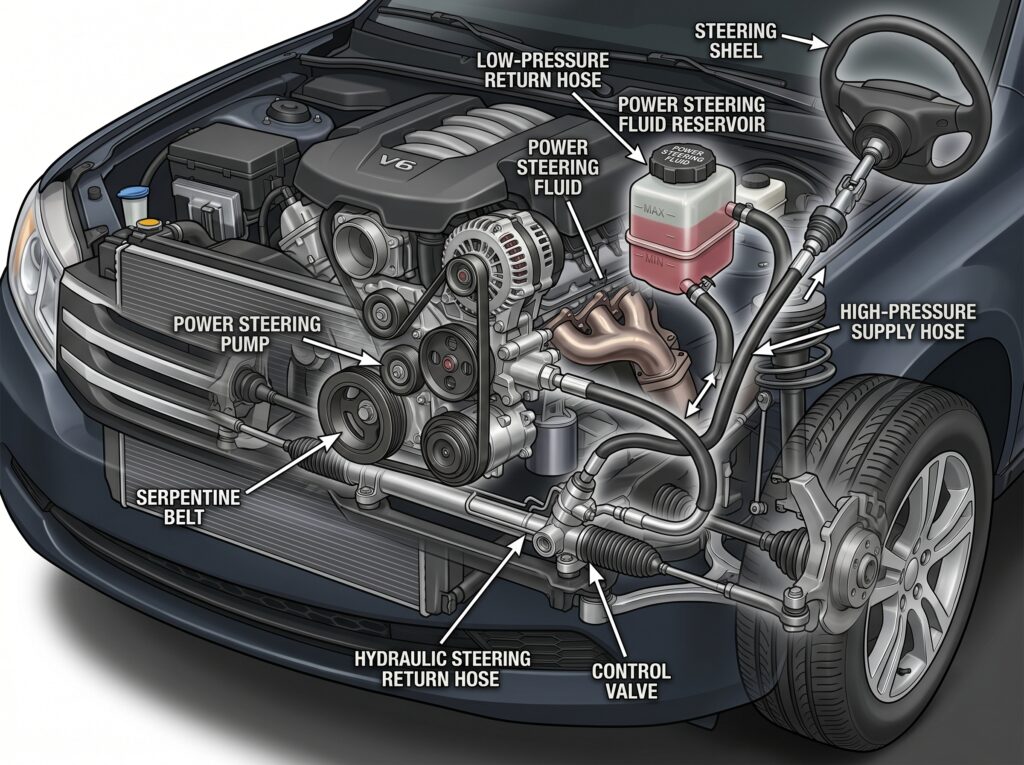
Most modern cars use a hydraulic power steering system designed to make turning effortless. This system works thanks to a special fluid that circulates under high pressure. If the level drops or if there is a leak, the pressure drops, and suddenly you are steering almost manually. Leaks are very common and happen due to damaged hoses, worn seals, cracked tubes, or loose connections. You may see red or brown fluid stains under the car or near the front wheels. If you ignore this, the pump runs dry and burns out, leading to a much more expensive repair.
Solution: Locate the power steering reservoir (usually a transparent tank with a cap marked “Steering”) and check the level when the engine is cold. If it is low, top it up with the exact fluid type specified in your manual, but do not just add and forget. If it went down, there is a leak that must be repaired immediately to avoid pump failure.
4. Contaminated, Old, or Thickened Fluid
Even if the level is correct, the condition of the fluid matters enormously. Over thousands of kilometers, the fluid degrades, absorbs moisture, and accumulates dirt, metal particles, and sludge. It loses its properties and becomes thick, sticky, or dark black instead of clear or reddish. Thick fluid cannot circulate fast enough through the narrow pipes and valves, reducing hydraulic assistance. This problem is most noticeable at low speeds or when turning the wheel fully.
Solution: Power steering fluid needs changing just like engine oil. If it looks dark or dirty, perform a complete system flush and refill with fresh, high-quality fluid. This simple maintenance often fixes stiffness and noise completely.
5. Faulty or Failing Power Steering Pump
The pump is the heart of the hydraulic system; it is responsible for generating the pressure that helps you turn. Driven by a belt or electric motor, it works constantly while the engine runs. Over time, internal vanes wear out, bearings fail, or seals break. When the pump starts to fail, pressure becomes irregular or drops significantly. You will notice the wheel gets heavier, especially when turning slowly, and you may hear a whining or groaning noise that changes with engine speed. If it fails completely, the steering becomes extremely heavy and dangerous.
Solution: A failing pump cannot be repaired; it must be replaced with a new or reconditioned unit. Do not delay this repair, as a broken pump can send metal debris through the entire system, destroying the steering rack and making the repair cost triple.
⚠️ Warning Signs: When Your Steering Needs Urgent Attention
Before the system fails completely, the car sends clear signals. If you notice any of these symptoms, do not wait: investigate and fix the problem immediately.
- 🔧 Stiff or Heavy Sensation: You have to use much more force than usual to turn, especially at low speeds or when parking.
- 🔊 Unusual Noises: Whining, groaning, or squealing sounds when turning the wheel. This is the classic sign of low fluid or a failing pump.
- 📳 Vibrations or Shaking: The steering wheel vibrates or kicks back, especially on rough roads or when braking.
- ↔️ Resistance or Sticking: The wheel feels like it catches or gets stuck in certain positions, requiring extra effort to move past that point.
- 🚗 Off-Center Position: The car pulls to one side, or the wheel is not centered when driving straight.
🛡️ How to Maintain a Healthy Steering System
Prevention is always better and cheaper than repair. Follow these 6 maintenance rules to ensure your steering remains light, smooth, and safe for the life of your vehicle:
- ✅ Check Tire Pressure Weekly: It takes 2 minutes and saves you from many problems. Keep all four tires at the exact recommended pressure.
- ✅ Inspect Fluid Level and Condition: Every month, check the reservoir. If the fluid is dark, smells burnt, or looks dirty, change it immediately. Keep it at the correct level.
- ✅ Look for Leaks: Check under the car and near the wheels for wet spots or oil stains. A small leak today becomes a big failure tomorrow.
- ✅ Replace Components on Time: When changing tires or doing suspension work, ask the mechanic to check ball joints, tie rods, and bushings. Replace them before they break.
- ✅ Use Only Recommended Fluid: Never mix different types of fluid or use generic products. Using the wrong fluid damages seals and pumps irreparably.
- ✅ Professional Inspection: If you feel anything unusual, do not ignore it. Steering is safety; let a professional diagnose it before it becomes dangerous or expensive.
📹 Video Guide: How to Diagnose Hard Steering
Watch this video to see exactly how to identify the cause and what steps to take:
📌 Conclusion: Safety Starts with Easy Steering
The steering system is not just about comfort; it is the most critical safety system in your car. A stiff, heavy, or resistant steering wheel is not a minor fault; it is a clear warning that something is wrong and needs attention.
From simple solutions like adjusting tire pressure or changing old fluid, to mechanical repairs like replacing the pump or worn joints, every problem has a solution. The key is to detect it early and act before it affects your safety or leads to more expensive damage.
By performing simple regular checks, maintaining fluid levels, and listening to what your car tells you, you ensure that your steering remains precise, light, and safe. Driving should be smooth and effortless, and with proper care, it always will be.